 Flamingo
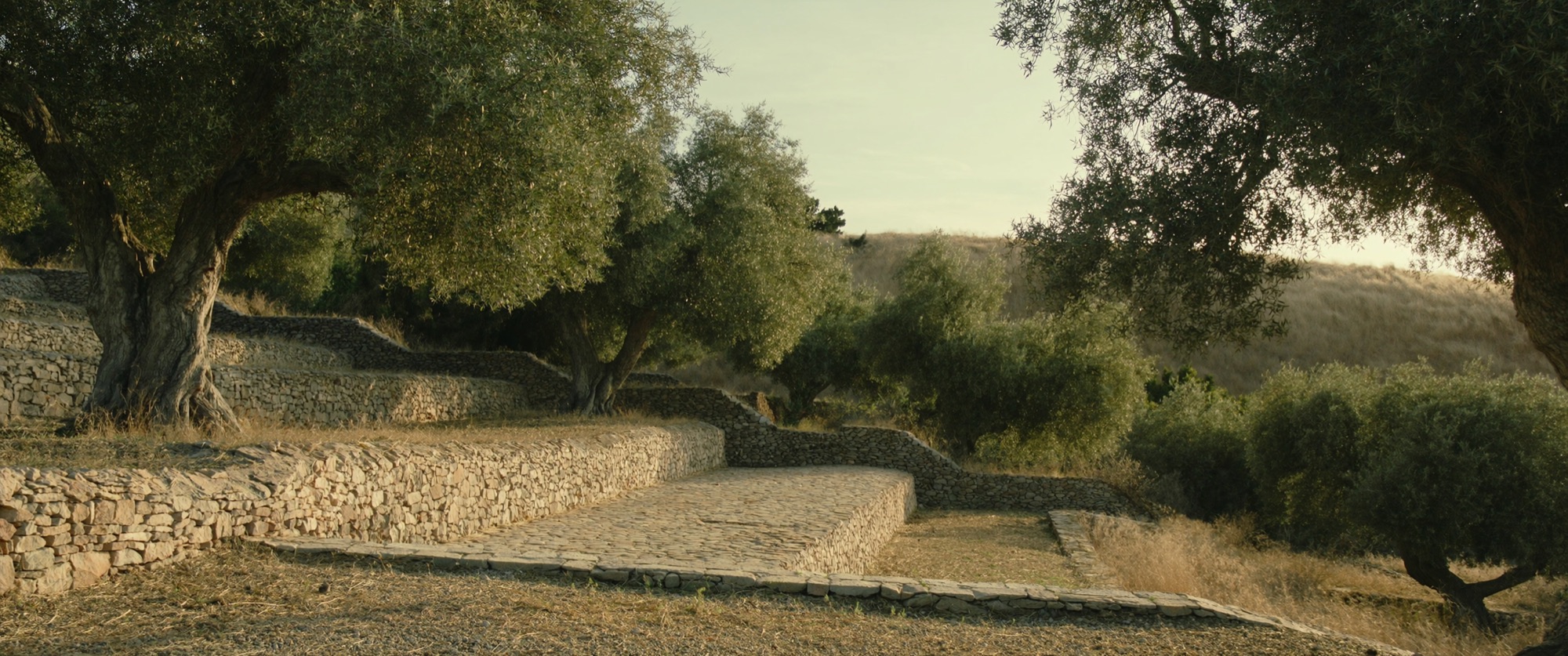
Sotira lies in the Famagusta district in the south-east of Cyprus, west of Paralimni; Visit Famagusta gives 5 to 10 minutes by car to Ayia Napa. The 2011 census counted 5,474 inhabitants, and for 2021 the Wikipedia table on local government reform gives 5,905. Since 1 July 2024 Sotira has no longer been an independent dimos but a municipal district of the new municipality of Agia Napa. The village centre lies around two kilometres as the crow flies south-west of Paralimni Lake, a saline seasonal wetland that holds water in winter and dries out for the rest of the year.
Sotira in figures: location, population, administration
Sotira lies in the Famagusta district (Greek Ammochostos) in the south-east of Cyprus, west of Paralimni and a few kilometres inland from the coast between Ayia Napa and the fishing harbour of Potamos Liopetriou. Wikipedia gives the coordinates of the village as 35°01′36″ N, 33°57′01″ E.
On the population the sources diverge. What is certain is the 2011 census with 5,474 inhabitants, which the Wikipedia article takes from the CYSTAT table “Population – Place of Residence, 2011”. For 2021 the Wikipedia table on local government reform lists Sotira with 5,905 inhabitants; that figure goes back to the 2021 census, although the individual table from the Cypriot statistical service could not be opened directly in August 2026. The value is therefore documented at second hand, not checked against the primary source. Visit Famagusta speaks in round terms of about 6,000 inhabitants. For the Famagusta district as a whole, the 2021 census records 54,318 people according to Wikipedia, which is 5.9 per cent of the population of the Republic.
In administrative terms a good deal has shifted. The Cypriot parliament passed the local government reform in March 2022 in three laws, elections were held on 9 June 2024, and it has been in force since 1 July 2024. Two municipalities were created in the Famagusta district: Agia Napa, from Achna, Avgorou, Agia Napa, Liopetri and Sotira with 22,636 inhabitants between them, and Paralimni–Deryneia, from Acheritou, Deryneia, Frenaros and Paralimni with 31,682 inhabitants. Within it Sotira is a municipal district with four seats on the municipal council. This table knows of no municipality called “Ayia Napa–Sotira” and none called “Kokkinochoria”.
A note for anyone consulting the sources themselves: the Wikipedia article on Sotira still lists the village in its infobox (as of August 2026) as a “Municipality” and is not up to date on the administrative status. The authoritative source is the table on local government reform, which lists Sotira among the municipal districts.
One more point matters for navigation and for post: there is a second Sotira in the Limassol district. The unambiguous form here is “Sotira Ammochostou” with the postcode 5390.
Kokkinochoria: the red-earth villages and kolokasi
Kokkinochoria translates as “red villages”, and the name comes from the iron-rich red soil in the south-east of the island, in which tuber and root vegetables above all thrive. How many villages belong to it is answered differently from source to source. The CyprusAlive portal gives no number but lists twelve places: Avgorou, Ormidia, Dasaki Achnas, Xylofagou, Frenaros, Sotira, Paralimni, Vrysoulles, Liopetri, Deryneia, Ayia Napa and Protaras. This list reaches beyond the Famagusta district, since Ormideia and Xylofagou belong to the Larnaca district, and with Ayia Napa and Protaras it counts in two tourist resorts.
According to CyprusAlive, potatoes, artichokes, citrus fruit and other vegetables are grown. Visit Cyprus, the portal of the Deputy Ministry of Tourism, expressly names watermelons, figs, pomegranates and kolokasi (taro, Colocasia esculenta) for Sotira.
Kolokasi shapes the village's agriculture. Commission Implementing Regulation (EU) 2016/1322 of 1 August 2016 entered “Kolokasi Sotiras / Kolokasi-Poulles Sotiras” as a protected designation of origin, published in Official Journal L 209 of 3 August 2016. Besides Sotira, the production area also covers Avgorou, Frenaros and Liopetri, so the protection does not apply to Sotira alone. Visit Famagusta puts the village's share of Cypriot kolokasi production at over 85 per cent; the kolokasi festival in September is named by Visit Famagusta and Visit Cyprus alike.
For the first mention, Visit Famagusta cites the year 1191, when kolokasi is said to have been served at the wedding of Richard the Lionheart and Berengaria at Limassol Castle. The page gives no contemporary source for this, and none could be found elsewhere. The statement should be read as tradition, not as documentary evidence.
The metal wind pumps are part of the village scene. According to an account by Famagusta News, the first windmills came to Cyprus around 1912, and from 1922 there were models with automatic oiling. They pumped well water for irrigation, and most of them stood around Paralimni and Sotira, because growing kolokasi takes a great deal of water. In 2015 the municipal council of Paralimni set aside 50,000 euros to repair decaying windmills. Wikipedia records that many of these wind pumps no longer turn today and have been replaced by electric or diesel-driven pumps.
Churches, chapels and the church museum
Visit Cyprus writes that the village was founded in Byzantine times and named after “Jesus the Saviour (Sotiros Christou)”. In and around the village stand five old religious buildings as well as a church museum. On the dating the two tourism portals differ throughout, which is why both sets of figures are given here in each case: Visit Cyprus dates all the Sotira churches summarily to the 13th to 16th centuries, which looks more like a blanket statement than an individual assessment, whereas Visit Famagusta dates each building separately. The more specific series is the more usable one; neither is certain.
Ayios Mamas: Visit Famagusta gives the 16th century and describes a single-aisled building with a dome in the Franco-Cypriot style, faded frescoes and, on the north-west wall, the founder's coats of arms with a lion and a fish. Visit Cyprus lists the chapel within the blanket span of the 13th to 16th centuries.
Agios Georgios Chortakion: Visit Famagusta dates the cross-in-square domed building to the early 12th century and mentions ships drawn in charcoal in the narthex, presumably by sailors. Visit Cyprus again has the 13th to 16th centuries.
Panagia Chordakiotissa: according to Visit Famagusta a single-aisled domed church of the 12th century beside the village cemetery and the last surviving part of an earlier monastery. Visit Cyprus describes the same building as a cruciform church and places it in the same blanket span.
Agios Theodoros: Visit Famagusta places the ruin about two kilometres west of Sotira; the main building has largely collapsed, while the narthex added later is still standing. Visit Cyprus likewise records that only the narthex survives.
With the main church, Metamorfosis tou Sotiros, the sources resolve the apparent contradiction themselves. Visit Cyprus calls it an important medieval monument of the 16th century, while Visit Famagusta describes a new church expressly built next to the older one: begun in 1935, completed in 1939, consecrated in 1955 by Archbishop Makarios. So there are two buildings standing side by side.
The church museum is housed in the chapel of Ayios Georgios, which was rebuilt in 1899 over the remains of an earlier building, and shows icons, gospel books and crosses. Opening hours are not published (as of August 2026); before a visit it is worth ringing the municipality via sotira.org.cy. On the coast stands the chapel of Ayia Thekla, and west of it a catacomb cut into the rock.
Festivals through the year: the village festival from the end of June to the beginning of July, the Feast of the Saviour on 6 August, Palm Sunday at the new church and the kolokasi festival in September (information as of August 2026; check the dates before travelling).
The lake next door: Paralimni Lake, flamingos and Natura 2000
The body of water north-east of the village is called Paralimni Lake. Deryneia lies to the north of it, Sotira to the south-west. From the village point of Sotira (35°01′36″ N, 33°57′01″ E according to Wikipedia) to the centre of the lake bed (35.0388 N / 33.9674 E according to OpenStreetMap) it is about two kilometres as the crow flies; that figure comes from our own calculation using the two sets of coordinates in August 2026, and the western edge of the lake bed lies correspondingly closer. So the village centre does not sit on the shore.
On the area the sources contradict one another. BirdLife Cyprus gives about 350 hectares. The Natura 2000 register lists the site as “LIMNI PARALIMNIOU” under the code CY3000008 with 272.56 hectares. The difference probably arises because the boundary of the protected area is drawn more tightly than the lake bed as a whole. For the designated protection status the official figure is authoritative; for describing the wetland as a whole, the wider one.
The lake is indeed saline. For the site, the Natura 2000 data sheet records glasswort swards (“Salicornia and other annuals colonising mud and sand”) covering 247 hectares and Mediterranean salt meadows covering 1.1 hectares, along with 9.47 hectares of riparian galleries and 0.05 hectares of hard-water bodies with stoneworts. A guest comment in the Cyprus Mail of 20 May 2026 speaks of a “rare semi-permanent saline lake”. The difference from the salt lakes of Larnaca and Akrotiri lies less in the salt than in the duration: according to the Wikipedia article on Paralimni, the shallow basin fills with rainwater in winter and dries out for the rest of the year. Anyone expecting a water surface in July will usually find a dry hollow.
The protection status is well documented. BirdLife Cyprus has listed the lake as an Important Bird and Biodiversity Area since 2004, and since 2009 it has been under legal protection as a Natura 2000 site. At least 186 bird species have been recorded, among them the greater flamingo (Phoenicopterus roseus); as breeding birds BirdLife names the spur-winged lapwing, the black-winged stilt and the Kentish plover, among others.
The lake is also a refuge for the endemic Cyprus grass snake (Natrix natrix cypriaca). BirdLife Cyprus lists it as a rare endemic subspecies, and the guest comment mentioned above describes it as one of the rarest snakes in Europe and the lake as its most important remaining refuge; according to the Wikipedia article on Paralimni it was considered extinct in the 1960s and was rediscovered in 1994. In the wet periods of 2013 and 2014 the tadpole shrimp Triops cancriformis was recorded in the lake for the first time in Cyprus, documented in the journal Limnetica; the Cyprus Mail names two known sites on the island.
On when to watch for flamingos there is now more to go on than travel portals. The Cyprus Mail reported on 8 December 2025 that the first wave of flamingos had arrived and that the birds initially spread across five wetlands, Paralimni Lake among them. In the same report Nikos Kassinis of the Game and Fauna Service gives an average of 5,000 to 10,000 wintering birds in these areas, drawing on monthly waterbird counts that the service and BirdLife Cyprus have been carrying out for two decades; on that basis the number has fallen by 14 to 31 per cent since 2013. For a visit this means that the winter months are usually the time when flamingos stand at Cypriot wetlands. Whether they stand at Paralimni Lake depends on the water level, and no promise can be derived from it.
One point belongs in the planning. According to BirdLife Cyprus, hunting is permitted daily on 30 per cent of the area in November and December. As further pressures the organisation names a shooting range without environmental approval, regarded as the main source of lead input, unregulated drainage, a motocross track without permission, poaching and illegal bird trapping, fly-tipping, along with development pressure and uncontrolled access. Flamingos found dead with lead poisoning are attributed by BirdLife to the shot ammunition, and illegal shooting comes on top of that. In 2012 the European Court of Justice ruled against Cyprus because the site was not sufficiently protected; the shooting range was one of the points criticised.
For visitors, then: watch from the edge, do not enter the lake bed, keep your distance, bring binoculars.
Shopping, eating and everyday life in Sotira
Sotira is agricultural in character; the tourist restaurants sit in Ayia Napa, Protaras and at the fishing harbour of Potamos Liopetriou. In the village centre, life plays out around the church square.
Documented on the spot is the Octo Microbrewery on Agiou Anastasiou Street. The operator's site octo.beer puts the tour at 20 euros per person and describes it as a walk with the brewmaster through a small beer museum and the production area, with a tasting and local snacks; seven beers are named, among them a brew following a Bronze Age fig recipe. The booking portals' figures differ from this: Musement lists two to four hours as the duration in its key facts and 90 minutes and three beers in the running text on the same page. Appointments are by arrangement, so an enquiry a few days beforehand makes sense. All information as of August 2026; ask about the price and the format directly before visiting.
On a weekly market there is little solid to say. No publicly documented market day for Sotira could be found; in Cyprus each municipality sets its own laiki agora, so the dates are correspondingly hard to document online. The only reliable way to clear this up is through the municipality.
For a big shop you drive to Paralimni. According to the operator, the METRO store at Leoforos Protara 212 has 4,000 square metres of sales floor on two levels and 15 tills, plus step-free access, toilets with baby-changing facilities, escalators for trolleys and a large cafeteria on the upper floor. The operator's site gives the opening hours as Monday to Saturday 7:30 to 21:00 and Sunday 9:00 to 21:00, and the telephone number 23828111 (retrieved on 26 August 2026 – check before setting off, as opening hours change seasonally and on public holidays).
About three kilometres west of Ayia Thekla lies Potamos Liopetriou, a long river mouth with traditional fishing boats lying along its banks; two tavernas stand at the water (Rough Guides).
What lies nearby – with driving times
Ayia Napa is 5 to 10 minutes by car from Sotira. That is Visit Famagusta's figure and the only directly documented journey time from the village. The municipal area includes a stretch of coast with the beach at Ayia Thekla, complete with chapel and rock catacomb, as well as the bays of Sirena Beach and Poseidon Beach.
Cape Greco National Park lies, according to Visit Cyprus, east of Agia Napa and south-east of Protaras. For the area Visit Cyprus gives 385 hectares, while a Cyprus Mail piece of 18 July 2026 has “more than 380 hectares”; the official tourism portal's figure carries more weight because it is stated exactly, whereas the newspaper's figure describes only a lower limit and does not contradict the Visit Cyprus number. Visit Cyprus gives no year for the designation as a National Forest Park, and no official confirmation of one could be found; no year is therefore given here.
Visit Cyprus counts about 400 plant species in the park, 14 of them endemic and 14 very rare, along with foxes, hares and hedgehogs, and among the birds the endemic Cyprus wheatear (Oenanthe cypriaca). The whitewashed chapel of Agioi Anargyroi has a staircase leading down to a sea cave. For the paths the Cyprus Mail gives a table: Aphrodite Trail 2 kilometres (easy), Sea Caves Path 1 kilometre (easy), Coastal Nature Trail 4 kilometres (moderate); the 2 kilometres of the Aphrodite trail also appear on Visit Cyprus. According to the Cyprus Mail the sea caves can be viewed from marked paths above the cliffs, some visitors go into the water when the sea is calm – the paper expressly classes cliff jumping as risky – and boat trips pass by them. The Cyprus Mail gives the journey time as about 10 minutes by car from Protaras and about 15 minutes by car from Ayia Napa; a journey time from Sotira is not documented in any of the sources checked.
Paralimni lies, according to Wikipedia, 110 kilometres east of Nicosia, about 10 kilometres south of Famagusta and some 80 metres above sea level. The article describes the town as the provisional administrative centre of the Famagusta district but gives no year for this; the connection with the division of 1974 suggests itself but is not documented in the source. Since the reform, Paralimni has been a municipal district of the municipality of Paralimni–Deryneia.
Deryneia counted 5,758 inhabitants in 2011, and the reform table gives 6,229 for 2021. On the share of its land in the north, the same Wikipedia article contains two figures: in one place about 75 per cent of the village area, in another 70 per cent of the municipality. Which frame of reference is meant in each case is not clear; what holds up is the order of magnitude of about three quarters, not the exact figure. From the roof of the cultural centre you can look into the sealed-off ghost town of Varosha. In strawberries Deryneia leads with about 60 per cent of national production, and the all-Cyprus strawberry festival takes place every two years in mid-May at the sports ground of Anagennisi Deryneia.
The Deryneia crossing opened on 12 November 2018 (Cyprus Mail of the same day). On the operating hours the available information is contradictory – partly 7:00 to 23:00, partly round-the-clock operation – and no reliable official statement could be found in August 2026. Ask the police or the municipality before setting off.
Getting there: airports, journey times and prices
The nearest airport is Larnaca (LCA). On the journey time the statements diverge. Visit Famagusta writes of “only a 30 minute ride” to Ayia Napa and Protaras, without specifying a route or a destination; in the context of the page it is about a shuttle, a taxi or a hire car, so 30 minutes by car. Kapnos Airport Shuttle gives about 65 minutes by car for its own Larnaca Airport–Protaras line via the A3 motorway. The operator's figure is easier to follow because it comes with a route, a destination and stops; part of the difference is explained by a scheduled bus stopping along the way, whereas the 30 minutes by car stand without a reference route.
Sotira lies on the link between Larnaca and Ayia Napa, and so slightly closer to the airport than Ayia Napa itself. A documented journey time airport–Sotira could not be found, and deriving one from the figures above would remain unverified.
For the bus transfer, Kapnos Airport Shuttle gives 15 euros per adult and 5 euros for children aged 2 to 12 on the one-way trip from Larnaca Airport to Protaras; children under 2 travel free. The stops given in Protaras are Pernera Avenue (about 150 metres from the Hotel Windmills) and Protaras Avenue at the McDonald's stop. The operator's post is dated 28 June 2026 and was retrieved in August 2026; prices and timetables change seasonally and should be checked before travelling.
Via Paphos (PFO) the journey is considerably more involved. Visit Famagusta gives about 140 kilometres to the Famagusta region, about 2 hours by taxi and over 100 euros; all bus connections from Paphos to there take up to 5 hours accordingly. The page is dated 15 November 2024 and was retrieved in August 2026, so taxi fares should be asked about before booking. As an interim solution the page names the Kapnos shuttle from Paphos to Larnaca and changing there towards Ayia Napa and Protaras.
Two practical points to close. Cyprus drives on the left, and overtaking is on the right (Visit Famagusta). And without a vehicle you are limited in Sotira: the village itself is easy to cover on foot, but the beaches, the national park and the large supermarkets lie outside it, so a hire car, a taxi or the local bus routes become necessary.
Frequently asked questions
Where exactly is Sotira in Cyprus?
Sotira lies in the Famagusta district (Ammochostos) in the south-east of Cyprus, west of Paralimni and a few kilometres inland from the coast. Visit Famagusta gives 5 to 10 minutes by car to Ayia Napa. Wikipedia gives the coordinates as 35°01′36″ N, 33°57′01″ E. Take care when navigating: there is a second Sotira in the Limassol district. The unambiguous form is “Sotira Ammochostou” with the postcode 5390.
How many inhabitants does Sotira have?
The 2011 census counted 5,474 inhabitants; that is the best-documented figure. For 2021 the Wikipedia table on local government reform gives 5,905 inhabitants, based on the 2021 census – the individual table from the Cypriot statistical service could not be opened directly in August 2026, so the value is documented at second hand. Visit Famagusta speaks in round terms of about 6,000. The Famagusta district as a whole counted 54,318 people in 2021 according to Wikipedia.
Is Sotira a municipality in its own right?
Not any more. The Cypriot local government reform was passed in March 2022 in three laws, elections were held on 9 June 2024, and it has been in force since 1 July 2024. Two municipalities were created in the Famagusta district: Agia Napa, from Achna, Avgorou, Agia Napa, Liopetri and Sotira, and Paralimni–Deryneia, from Acheritou, Deryneia, Frenaros and Paralimni. Within it Sotira is a municipal district with four seats on the municipal council. The Wikipedia article on Sotira still lists the village in its infobox as a “Municipality” and is out of date on the administrative status.
What are the Kokkinochoria?
“Red villages” – the places in the south-east of Cyprus with iron-rich red soil, on which potatoes, artichokes, citrus fruit and other vegetables above all grow. CyprusAlive gives no number but lists twelve places, among them Sotira, Paralimni, Deryneia, Frenaros, Liopetri, Avgorou, Ayia Napa and Protaras. The list reaches beyond the Famagusta district, because Ormideia and Xylofagou belong to the Larnaca district and, with Ayia Napa and Protaras, two tourist resorts are counted in.
Which churches are there in Sotira, and how old are they?
Five old religious buildings and a church museum. On the dating the portals contradict one another: Visit Famagusta gives the 16th century for Ayios Mamas, the early 12th for Agios Georgios Chortakion and the 12th century for Panagia Chordakiotissa, whereas Visit Cyprus dates all the Sotira churches summarily to the 13th to 16th centuries. The blanket statement by Visit Cyprus looks less thoroughly checked, but neither of the two series is certain. Of Agios Theodoros only the narthex still stands. The main church, Metamorfosis tou Sotiros, is in fact two buildings side by side: an older one and a new building from 1935 to 1939, consecrated in 1955 by Archbishop Makarios.
Can you see flamingos at Paralimni Lake?
It is possible, but it cannot be promised. The greater flamingo (Phoenicopterus roseus) is documented for the lake by BirdLife Cyprus, and at least 186 bird species have been recorded there in all. The Cyprus Mail reported on 8 December 2025 on the arrival of the first flamingos and named Paralimni Lake among five wetlands across which the birds initially spread; according to the Game and Fauna Service an average of 5,000 to 10,000 birds winter there. Whether flamingos stand at the lake itself depends on the water level: the basin usually holds water only in winter.
Is the lake near Sotira a salt lake?
It is saline. The Natura 2000 data sheet for site CY3000008 records glasswort swards covering 247 hectares and Mediterranean salt meadows covering 1.1 hectares, and a guest comment in the Cyprus Mail of 20 May 2026 speaks of a “rare semi-permanent saline lake”. The difference from the salt lakes of Larnaca and Akrotiri lies in the duration: Paralimni Lake fills with rainwater in winter and dries out for the rest of the year. For the area BirdLife Cyprus gives about 350 hectares and the official Natura 2000 register 272.56 hectares; the boundary of the protected area is drawn more tightly than the lake bed as a whole.
How far is Cape Greco from Sotira?
There is no documented journey time from Sotira in the sources checked. The Cyprus Mail gives about 10 minutes by car from Protaras and about 15 minutes by car from Ayia Napa; from Sotira the 5 to 10 minutes by car to Ayia Napa would be added, but our own extrapolation remains unverified and so does not appear as a figure on this page. For the area Visit Cyprus gives 385 hectares and the Cyprus Mail “more than 380 hectares”. The paths are given as 2 kilometres (Aphrodite Trail), 1 kilometre (Sea Caves Path) and 4 kilometres (Coastal Nature Trail).
Where do you shop in Sotira and the surrounding area?
For a big shop, go to Paralimni: according to the operator, the METRO store at Leoforos Protara 212 has 4,000 square metres on two levels, 15 tills, step-free access and a cafeteria. The operator's site gives the opening hours as Monday to Saturday 7:30 to 21:00 and Sunday 9:00 to 21:00 (retrieved on 26 August 2026; check before setting off). There is no publicly documented market day for Sotira; in Cyprus each municipality sets its own laiki agora, which is why the dates can only be cleared up through the municipality.
How do you get from Larnaca Airport to Sotira?
Larnaca (LCA) is the nearest airport. Visit Famagusta gives 30 minutes by car to Ayia Napa and Protaras without stating a route or a destination; Kapnos Airport Shuttle gives about 65 minutes by car for its own Larnaca–Protaras line via the A3, at 15 euros per adult and 5 euros for children aged 2 to 12 (operator's figures from 28 June 2026, retrieved in August 2026; check seasonally). There is no documented journey time to Sotira itself; the village lies on the way and is thus slightly closer. Via Paphos it is about 140 kilometres, about 2 hours by taxi and over 100 euros, or up to 5 hours by bus.
Sources
Every figure on this page comes from the sources listed below. Last checked: August 26, 2026. Please still check for yourself before you travel — prices and timetables change.
- Sotira, Famagusta – Wikipedia (coordinates, population 2011: 5,474)
- Local government reform (Cyprus) – Wikipedia (decision March 2022, election 9.6.2024, in force 1.7.2024, municipalities of Ayia Napa and Paralimni–Deryneia, Sotira 5,905)
- Famagusta District – Wikipedia (2021 census: 54,318 people)
- Paralimni – Wikipedia (110 km east of Nicosia, 10 km south of Famagusta, 80 m above sea level, seasonal lake, windmills, grass snake rediscovered in 1994)
- Deryneia – Wikipedia (5,758 inhabitants in 2011, 75 % of the village area and 70 % of the municipality in the north, view of Varosha, 60 % of strawberry production, festival every two years in mid-May)
- Visit Cyprus (Deputy Ministry of Tourism) – Sotira village (founding, churches of the 13th to 16th centuries, Metamorfosis 16th century, kolokasi, festivals)
- Visit Famagusta – Sotira (the churches in detail, church museum of 1899, beaches, a share of over 85 % of kolokasi, around 6,000 inhabitants, 5–10 minutes by car to Ayia Napa, the 1191 tradition)
- Visit Famagusta – Traveling to and from Ayia Napa – Protaras, page dated 15.11.2024 (the 30-minute figure, Paphos approx. 140 km, taxi approx. 2 hours and over 100 euros, bus up to 5 hours, driving on the left)
- BirdLife Cyprus – Paralimni Lake (around 350 hectares, IBA 2004, Natura 2000 since 2009, at least 186 bird species, shooting range and lead contamination, hunting in November and December on 30 % of the area, ECJ ruling of 2012)
- Natura 2000 site CY3000008 “LIMNI PARALIMNIOU”, Biodiversity Information System for Europe / EUNIS (272.56 hectares, designated 2009, Salicornia 247 ha, salt meadows 1.1 ha)
- Cyprus Mail, guest comment by Chris Englezou, 20.05.2026: “Hands off Lake Paralimni” (“rare semi-permanent saline lake”, grass snake, Triops at two sites)
- Cyprus Mail, 08.12.2025: “First flamingos reach Cyprus, fewer expected this year” (Paralimni Lake among five wetlands, 5,000–10,000 wintering birds, decline of 14–31 % since 2013)
- Limnetica 33(2), 2014: “First record of the Tadpole Shrimp Triops cancriformis (Branchiopoda, Notostraca) in Cyprus” (records at Paralimni Lake in the wet periods of 2013 and 2014)
- Durchführungsverordnung (EU) 2016/1322 der Kommission vom 1. August 2016, Amtsblatt L 209 vom 3.8.2016 – entry of “Kolokasi Sotiras / Kolokasi-Poulles Sotiras” (PDO), area of Sotira, Avgorou, Frenaros, Liopetri
- Visit Cyprus – Cape Gkreko National Forest Park (385 hectares, east of Ayia Napa and south-east of Protaras, around 400 plant species, 14 of them endemic, Aphrodite trail 2 km, Agioi Anargyroi)
- Cyprus Mail, 18.07.2026: “Cape Greco – the complete guide to Cyprus' national forest park” (more than 380 hectares, the Sea Caves visible from marked paths above, trail table 2/1/4 km, 10 and 15 minutes by car respectively)
- Cyprus Mail archive, 12.11.2018: “New crossings to open on Monday” (opening of the Deryneia and Lefka–Apliki crossings; no operating hours given)
- Famagusta News – why Paralimni has so many windmills (the first from 1912, oil-driven automation from 1922, 50,000 euros of restoration funding in 2015)
- CyprusAlive – Kokkinochoria (Red Villages): a list of twelve places without a total figure, the crops grown
- Octo Microbrewery, Sotira – operator's website (tour 20 euros per person, beer museum, tour with the brewmaster, tasting of seven beers)
- Musement – Octo Microbrewery Tour (differing details: key facts give 2 to 4 hours, the body text 90 minutes and three beers)
- METRO Paralimni – operator's website (Leoforos Protara 212, 4,000 m² on two levels, 15 checkouts, opening hours Mon–Sat 7:30–21:00, Sun 9:00–21:00, telephone 23828111; accessed 26.08.2026)
- Kapnos Airport Shuttle – Larnaca–Protaras, post of 28.06.2026 (15 euros for adults, 5 euros for children aged 2–12, under 2 free, around 65 minutes by car via the A3, stops at Pernera Avenue and Protaras Avenue)
- Rough Guides – Potamos Liopetriou (around three kilometres west of Agia Thekla, river mouth with fishing boats, two tavernas)
- World Postal Code – Famagusta district: “Sotira Ammochostou 5390”
- OpenStreetMap – Λίμνη Παραλίμνι (lake bed, centre point 35.0388 N / 33.9674 E; basis for the distance calculation from Sotira)