 Flamingo
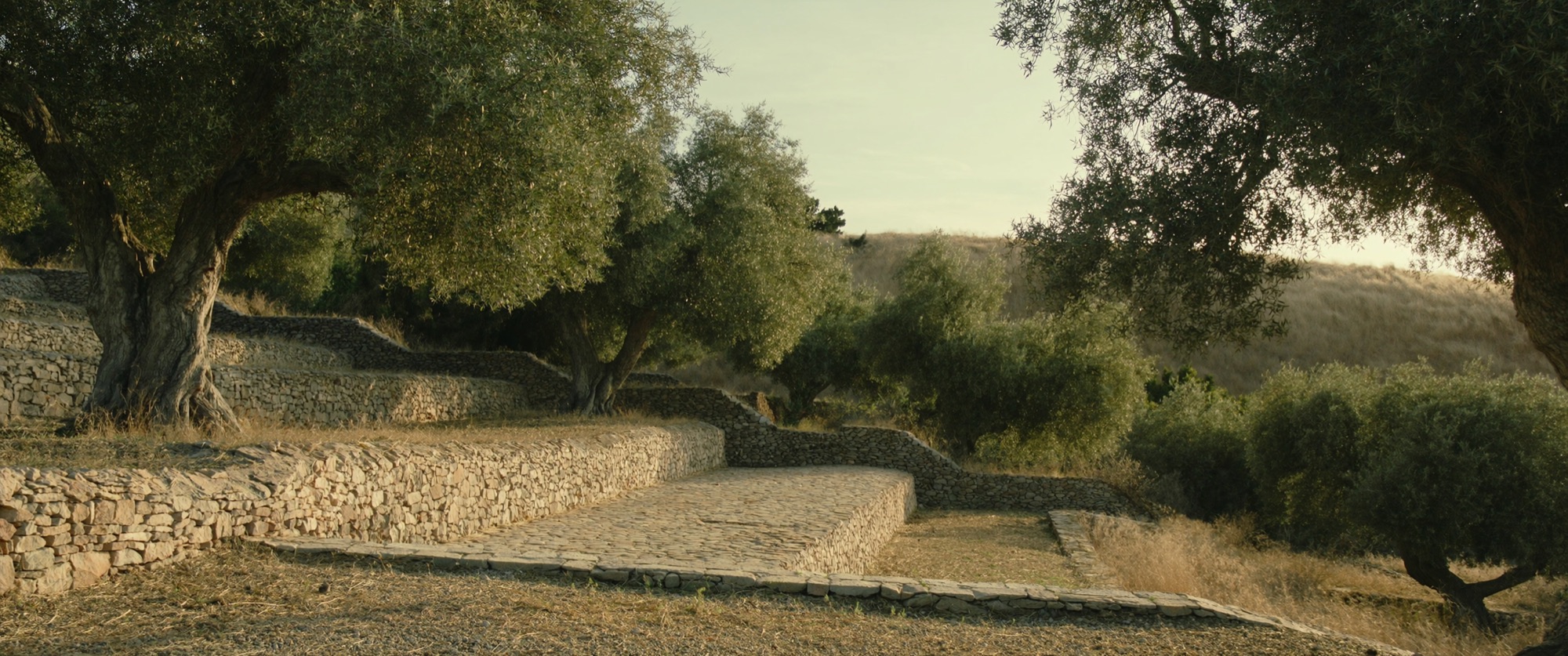
Kokkinochoria means red villages. The name refers to the farming villages in the south-east of Cyprus whose mineral-rich red soil, according to the Deputy Ministry of Tourism, has made them known for potatoes, strawberries and watermelons. There is no official list; besides Sotira, the sources include Liopetri, Avgorou, Frenaros, Deryneia, Xylofagou and Ormideia, among others. According to our own OSRM route calculation, these villages are between around 4 and 22 road kilometres from Sotira, Frenaros the nearest and Ormideia the furthest. There are churches from the 12th to the 16th centuries to see, the Achyronas memorial in Liopetri, the fishing harbour at the river mouth of Potamos Liopetriou, the Achna reservoir as a special protection area for birds and, in summer, the village festivals celebrating carrots, watermelons, potatoes and pomegranates. Without a car, bus routes 703, 709 and 714 run from Sotira to several of these villages.
What the Kokkinochoria are
The name is made up of the Greek words for red and villages. On its page about the Eastern Cultural Route, the Deputy Ministry of Tourism describes the Kokkinochoria as farming villages with mineral-rich red soil, known for potatoes, strawberries and watermelons. An application for EU protection of origin is more precise: Cyprus submitted it on 31 March 2023 for the red soil potato, in Greek Κυπριακή πατάτα κοκκινογής, and it speaks of red, loamy soils rich in iron and magnesium. The EU published the application in the Official Journal on 20 September 2024; as of 6 November 2026 the name had not yet been entered in the EU register eAmbrosia.
No authority lays down definitively which villages belong to them. Visit Cyprus expressly calls Liopetri, Avgorou and Frenaros Kokkinochoria, as well as Sotira and Deryneia. The Larnaka Tourism Board includes Xylofagou, and the ministry's driving route “Cyprus Authentic Route 1” runs via Frenaros and Avgorou, past the Achna reservoir and the old village of Achna, to Xylotymvou, Ormideia, Xylofagou and Liopetri; it calls the inland villages the smaller villages known as the Kokkinochoria. Administratively, Liopetri, Avgorou, Achna and Sotira now belong to the municipality of Agia Napa, and Frenaros and Acheritou to the municipality of Paralimni–Deryneia; Xylofagou and Ormideia are in the Larnaca district.
Sotira itself, its protected kolokasi and the windmills of the area are described in the guide to Sotira. This guide is about the neighbouring villages and what you can see there in half a day or a full day. All road distances and driving times come from our own route calculation with OSRM on OpenStreetMap data of 6 November 2026, measured from the village point of Sotira and without traffic.
Liopetri: the Achyronas and two old churches
Liopetri lies around 6.6 road kilometres south-west of Sotira, about 10 minutes by car. According to Visit Cyprus, the potato is the village's main crop, alongside pomegranates and figs, and there are still houses of mud brick and straw in the village. The name has existed since the Middle Ages; old maps show Ligopetri.
Liopetri is best known for the Achyronas, the barn in which four fighters of EOKA, the organisation of the armed struggle against British colonial rule, were surrounded by British troops on 2 September 1958; none of the four survived. They were Andreas Karyos from Avgorou, Ilias Papakyriakou from Lythrangomi, Fotis Pittas from Frenaros and Christos Samaras from Liopetri. The barn has been restored and today also serves as an exhibition space about the four; in the courtyard stand a monument and their statues. Visit Cyprus lists it as a monument of the liberation struggle of 1955 to 1959. We have not found any official opening hours. The Achyronas Liopetriou stop is served by bus routes 703 and 714, among others, which also stop in Sotira.
Of the churches, Visit Cyprus names a small domed church of the Panagia from the 16th century, whose feast is celebrated on 15 August, and the church of Agios Andronikos with an octagonal dome and remains of frescoes in the apse; the English version of the page dates Agios Andronikos to the 15th century, the German version to the 16th. According to the municipality of Agia Napa, basket weaving is still practised in the village. In July Liopetri holds its carrot festival; in 2026 it was on Saturday 4 July at the community football stadium.
Potamos Liopetriou: fishing harbour at the river mouth
On the coast south of the village lies Potamos Liopetriou, around 9.9 road kilometres from Sotira, about 13 minutes by car. According to the Department of Fisheries and Marine Research, it is the only fishing shelter in Cyprus on a natural river, with space for about 140 boats. According to Visit Cyprus, the poet Arthur Rimbaud worked in an old quarry in this area; his biographers date this to 1878/79, when he was a foreman there. The municipality of Agia Napa mentions the remains of a Venetian watchtower nearby.
West of the river lies the Liopetri National Forest Park, 89 hectares in size, designated on 30 April 1984 and part of Natura 2000. The coastal strip from Makronissos to the harbour is designated as the Agia Thekla–Liopetri special protection area for birds, 70 hectares for the protection of the greater sand plover. Agia Thekla beach is right next to it; more on that in the guide to the beaches.
Frenaros and Acheritou: Byzantine churches and watermelons
Frenaros is the nearest neighbouring village, around 3.6 road kilometres north-west of Sotira, about 9 minutes by car. Visit Cyprus derives the name from the Fremenors, the Minorite friars of the nearby monastery of Panagia ton Chortakion from the Lusignan period; other sources spell the names slightly differently. According to Visit Cyprus, the churches of Agios Andronikos and Archangelos Michael date from the 12th century, and Agia Marina with its frescoes from the 15th; the village celebrates the feast of the Archangel Michael on 6 September. About five kilometres to the south-west stands the church of Panagia Asprovouniotissa, with frescoes from the late 15th or early 16th century.
Fotis Pittas, one of the four of the Achyronas, was born in Frenaros in 1935; a museum in a village house and a bust on the village square commemorate him. Frenaros is one of the major watermelon producers and celebrates this in July with a festival at the Frenaros football stadium, in 2026 on Saturday 11 July.
North-west of Frenaros lies Agios Georgios Acheritou, around 9.4 road kilometres from Sotira, about 16 minutes by car. The settlement was built after 1974 on Frenaros land for the displaced people of Acheritou, whose old village has been in the north of the island since then; most of them moved here in 1976 and 1977. The church of Agios Dimitrios from 1988 keeps icons from the old village, and the chapel of Agios Georgios on the northern edge is a domed building from the 15th or 16th century. In October Acheritou holds its wheat harvest festival, in 2026 on Friday 9 October on the main square.
Avgorou and Achna: museum, reservoir and picnic woods
Avgorou lies around 12.1 road kilometres west of Sotira, about 16 minutes by car. Visit Cyprus traces the name back to the baths of King Evagoras of Salamis and mentions finds from the Late Bronze Age. The church of the Apostles Peter and Paul celebrates its feast on 29 June, and the monastery of Agios Kendeas on 6 October. The Ethnographic Museum, in the two-storey Koutras house of 1921, shows 19th-century furniture and old textiles; visits are by appointment only, it is closed on public holidays, and admission costs 1.50 euros for adults and 0.50 euros for children. At the end of July Avgorou holds its potato festival, in 2026 on Saturday 25 July at the community football stadium.
Between Avgorou and Achna lies the Achna reservoir, around 15.8 road kilometres from Sotira, about 21 minutes by car. The dam was built in 1987 as part of the Southern Conveyor and holds 6.8 million cubic metres; the water is used to irrigate the Kokkinochoria. Since April 2008 the area around the lake, covering 178.9 hectares, has been a special protection area for birds. According to the management plan of the Game and Fauna Service, 224 bird species have been recorded there; the species protected are mainly the spur-winged lapwing, black-winged stilt, Kentish plover and red-footed falcon, and BirdLife Cyprus names the dam as a breeding site of the spur-winged lapwing. If you are looking for the flamingos in winter, you will find their resting sites in the guide to the flamingos.
Dasaki Achnas, around 21 road kilometres and about 30 minutes by car from Sotira, is a settlement built after 1974. The old village of Achna lies in the north of the island and, according to the Deputy Ministry of Tourism, can be seen from the road. On the southern edge of the settlement is the Department of Forests picnic site Δάσος Άχνας, for up to 130 people.
Xylofagou and Ormideia: watchtower, caves and pomegranates
Xylofagou, around 13.2 road kilometres south-west of Sotira and about 16 minutes by car, already belongs to the Larnaca district; the tourism board there counts the village among the Kokkinochoria. On Cape Pyla stands a round Venetian watchtower of limestone, 100 metres above the sea, which the British used as an observation post in the Second World War. In the village centre stands the 15th-century church of Agios Georgios with frescoes, and above the sea the chapel of Panagia tou Syrmatou. Fossil hippopotamus bones were found in the Agioi Saranta cave. The village's potato festival takes place every September; in 2026 it was on Saturday 5 September.
Ormideia, around 22.3 road kilometres and about 24 minutes by car away, is, according to the Sovereign Base Areas Administration, one of three enclaves of the Republic within the Dhekelia Sovereign Base Area. According to Visit Cyprus, finds from the village are now held in major museums, such as the Metropolitan Museum in New York. In September Ormideia holds a pomegranate festival on the village square, in 2026 on Saturday 19 September.
On the way west you drive through the Dhekelia Sovereign Base Area, which has been under British administration since 1960. According to the Administration, its boundaries were drawn in 1960 so that the villages of the time were excluded. After 1974, however, settlements also grew up within the area itself, including Dasaki Achnas.
By bus through the villages
By car, all the places mentioned here are within half an hour of Sotira. By bus it is possible too, but it takes planning. OSEA route 703 runs daily from Dhekelia via Ormideia, Xylofagou and Liopetri to Sotira and on to Paralimni, Protaras and Konnos, though only a few times a day. Route 714 connects Paralimni with Larnaca via Deryneia, Sotira, Liopetri and Xylofagou. The 709 runs from Strovilia via Vrysoulles, Acheritou and Frenaros to Sotira and Agia Napa, and the 710 from Deryneia via Sotira to Agia Napa.
There is no direct route from Sotira to Avgorou and Dasaki Achnas; they are served by the 705, which links both places with Agia Napa via Liopetri. A single journey costs 2 euros, or 3 euros between 21:00 and 04:00. According to OSEA the current timetable is valid until 15 November 2026 and the service may change after that, so it is worth checking the OSEA website before you travel. More on buses, taxis and hire cars is in the guide to getting there. If you would like to explore the villages from a fixed base: Suite 203 is in Sotira, right in the middle of them, and is expected to be ready for occupancy in March 2027; we are already taking enquiries.
Frequently asked questions
What does Kokkinochoria mean?
Red villages. The name refers to the farming villages in the south-east of Cyprus whose red, loamy soil is rich in iron and magnesium and grows mainly potatoes; they are also known for strawberries and watermelons. The term describes a landscape, not an administrative unit.
Which villages belong to the Kokkinochoria?
There is no definitive official list. Visit Cyprus names Liopetri, Avgorou, Frenaros, Sotira and Deryneia, and the Larnaka Tourism Board names Xylofagou; the Deputy Ministry of Tourism's driving route “Cyprus Authentic Route 1” also passes through Xylotymvou and Ormideia and past the old village of Achna.
What is the Achyronas in Liopetri?
The barn in which four EOKA fighters were surrounded by British troops on 2 September 1958 and lost their lives. It has been restored and is a memorial with an exhibition space; in the courtyard stand a monument and statues of the four. No official opening hours have been published. The Achyronas Liopetriou stop is served by bus routes 703 and 714, among others, which also stop in Sotira.
What is Potamos Liopetriou?
A fishing shelter at the river mouth near Liopetri, according to the Department of Fisheries and Marine Research the only one in Cyprus on a natural river, with space for about 140 boats. According to our own OSRM route calculation it lies around 9.9 road kilometres from Sotira, next to Agia Thekla beach and the Liopetri National Forest Park.
When are the village festivals of the Kokkinochoria?
In 2026 Liopetri held its carrot festival on 4 July, Frenaros its watermelon festival on 11 July, Avgorou its potato festival on 25 July, Xylofagou its potato festival on 5 September, Ormideia its pomegranate festival on 19 September and Acheritou its wheat harvest festival on 9 October. The Deputy Ministry of Tourism is expected to publish the dates for 2027 again in its regularly updated list of village festivals.
Can you reach the villages without a car?
In part. From Sotira, routes 703 and 714 run to Liopetri and Xylofagou (plus route 701A once a day from Monday to Friday), the 703 also to Ormideia, and the 709 to Frenaros and Acheritou. Avgorou and Dasaki Achnas can only be reached with a change, for example to route 705 via Liopetri. Some routes run only a few times a day; a single journey costs 2 euros.
Is the red soil potato protected?
Not yet. In 2023 Cyprus applied for protection as a geographical indication for “Κυπριακή πατάτα κοκκινογής” (Cyprus red soil potato), and the EU published the application on 20 September 2024. As of 6 November 2026 the name had not been entered in the EU register eAmbrosia. The kolokasi from Sotira and some neighbouring villages, by contrast, is protected.
Which village is closest to Sotira?
Frenaros, around 3.6 road kilometres and about 9 minutes by car away. It is followed by Liopetri at around 6.6 kilometres, Agios Georgios Acheritou at 9.4, Avgorou at 12.1 and Xylofagou at 13.2 kilometres (our own route calculation with OSRM).
Can you watch birds at the Achna reservoir?
Yes. Since 2008 the reservoir and its surroundings have formed a special protection area for birds covering 178.9 hectares; 224 bird species have been recorded, including the spur-winged lapwing, black-winged stilt and Kentish plover. From Sotira it is around 15.8 road kilometres according to our own OSRM route calculation.
Are Xylofagou and Ormideia in the Famagusta district?
No, both belong to the Larnaca district. Ormideia is an enclave of the Republic within the British Sovereign Base Area of Dhekelia, which you drive through on the way there.
Sources
Every figure on this page comes from the sources listed below. Last checked: 6 November 2026. Please still check for yourself before you travel, as prices and timetables change.
- Deputy Ministry of Tourism (Visit Cyprus): Eastern Cultural Route (Kokkinochoria from the words for red and villages, mineral-rich red soil, potatoes, strawberries and watermelons)
- Official Journal of the EU, C/2024/5685 of 20.09.2024: Single document “Κυπριακή πατάτα κοκκινογής / Cyprus red soil potato”, PGI-CY-02906 (red, loamy soils rich in iron and magnesium; communities in the Famagusta, Larnaca and Nicosia districts)
- European Commission, eAmbrosia: record EUGI00000019304, Cyprus red soil potato (application of 31.03.2023, status published, no registration date; accessed 06.11.2026)
- Deputy Ministry of Tourism: Cyprus Authentic Route 1, Explore Eastern Cyprus (route via Frenaros and Avgorou past old Achna to Xylotymvou, Ormideia, Xylofagou and Liopetri; old Achna visible from the road; Panagia Asprovouniotissa; finds from Ormideia in the Metropolitan Museum)
- Deputy Ministry of Tourism: Liopetri village (potato as the main crop, pomegranates and figs, mud-brick houses, Ligopetri on old maps, Panagia 16th century, Agios Andronikos, Achyronas, Rimbaud)
- Municipality of Agia Napa: Surrounding area (Liopetri: basket weaving, Rimbaud, Venetian watchtower near Potamos)
- Municipality of Agia Napa, announcement 841: national commemoration of the four of the Achyronas Liopetriou (2 September 1958, names and home villages)
- Cyprus Ministry of Education, portal on the liberation struggle of 1955 to 1959: Fotis Pittas (born in 1935 in Frenaros, killed in the Achyronas Liopetriou)
- Council for the Historical Memory of the EOKA Struggle (Ministry of Education): memorial and museum sites 1955 to 1959 (Achyronas restored and an exhibition space, monument and statues; museum and bust for Fotis Pittas in Frenaros)
- Department of Fisheries and Marine Research: Τα αλιευτικά καταφύγια της Κύπρου / The fishing shelters of Cyprus, 2017 (Potamos Liopetriou the only fishing shelter on a natural river, about 140 boats)
- Cyprus Department of Forests: Εθνικά Δασικά Πάρκα (Liopetri National Forest Park, 89 hectares, designated on 30.04.1984, Natura 2000)
- Cyprus Department of Forests: Εκδρομικοί Χώροι (picnic site Δάσος Άχνας, Famagusta district, for 130 people)
- Game and Fauna Service: management plans for the special protection areas Φράγμα Άχνας and Αγία Θέκλα – Λιοπέτρι, September 2016 (Achna: 178.9 ha since April 2008, 224 bird species, dam of 1987 with 6.8 million m³; Agia Thekla–Liopetri: 70 ha, greater sand plover)
- BirdLife Cyprus: Spur-winged Lapwing (breeding site at the Achna dam)
- Deputy Ministry of Tourism: Frenaros village (name from the Fremenors, Agios Andronikos and Archangelos Michael 12th century, Agia Marina 15th century, feast on 6 September, watermelons)
- Visit Famagusta: Vrysoules and Acheritou (settlement after 1974 on Frenaros land, move in 1976/77, Agios Dimitrios from 1988, chapel of Agios Georgios 15th or 16th century)
- Deputy Ministry of Tourism: Avgorou village (name from the baths of Evagoras, Late Bronze Age finds, feasts on 29 June and 6 October)
- Deputy Ministry of Tourism: The Avgorou Ethnographic Museum (Koutras house of 1921, visits by appointment, closed on public holidays, 1.50 euros and 0.50 euros)
- Deputy Ministry of Tourism: Village Festivals Celebrating our Tradition 2026, version 21 (Liopetri carrot festival 4.7., Frenaros watermelon festival 11.7., Avgorou potato festival 25.7., Xylofagou potato festival 5.9., Ormideia pomegranate festival 19.9., Acheritou wheat harvest festival 9.10.)
- Larnaka Tourism Board: Xylofagou (part of the Kokkinochoria, Agios Georgios 15th century, Panagia tou Syrmatou, caves with fossil hippopotamus bones, potato festival)
- Larnaka Tourism Board: Venetian Network of Watchtowers (tower on Cape Pyla, 100 metres above the sea, observation post in the Second World War)
- Sovereign Base Areas Administration: Administration Background (boundaries drawn in 1960 excluding the villages, Ormideia and Xylotymbou as enclaves)
- OSEA (Famagusta district bus company): Bus routes (routes 703, 705, 709, 710 and 714, timetables valid until 15.11.2026)
- OSEA: Bus stops sequence (stops Achyronas Liopetriou and Acheritou Community Board)
- OSEA: Tickets (single journey 2 euros, 3 euros between 21:00 and 4:00)
- OSRM routing on OpenStreetMap data (our own queries of 06.11.2026 from the Sotira village point: Frenaros 3.6 km, Liopetri 6.6 km, Achyronas 6.3 km, Agios Georgios Acheritou 9.4 km, Potamos Liopetriou 9.9 km, Avgorou 12.1 km, Xylofagou 13.2 km, Achna dam 15.8 km, Dasaki Achnas 21.0 km, Ormideia 22.3 km)
- European Commission, eAmbrosia: record EUGI00000015920, Κολοκάσι Σωτήρας / Kolokasi Sotiras (protected designation of origin PDO-CY-01309, registered on 03.08.2016)
- Deputy Ministry of Tourism (Visit Cyprus): Sotira village (one of the Kokkinochoria; watermelons, figs and pomegranates)
- Deputy Ministry of Tourism (Visit Cyprus): Deryneia village (one of the Kokkinochoria, the island's main strawberry grower)
- Visit Famagusta: Achna (municipal quarter of Agia Napa Municipality; Dasaki Achnas established after 1974)
- Wikipedia (French): Arthur Rimbaud, section “1878-1879 : départ pour l'Égypte et Chypre” (quarry around 30 km east of Larnaca from December 1878, work certificate dated 28 May 1879)
- Wikipedia (English): Achna (Dasaki Achnas built after 1974 by the displaced people of Achna within the Dhekelia Sovereign Base Area)